Laser Hair Removal Machine for Dark Skin: What the Spec Sheet Must Say
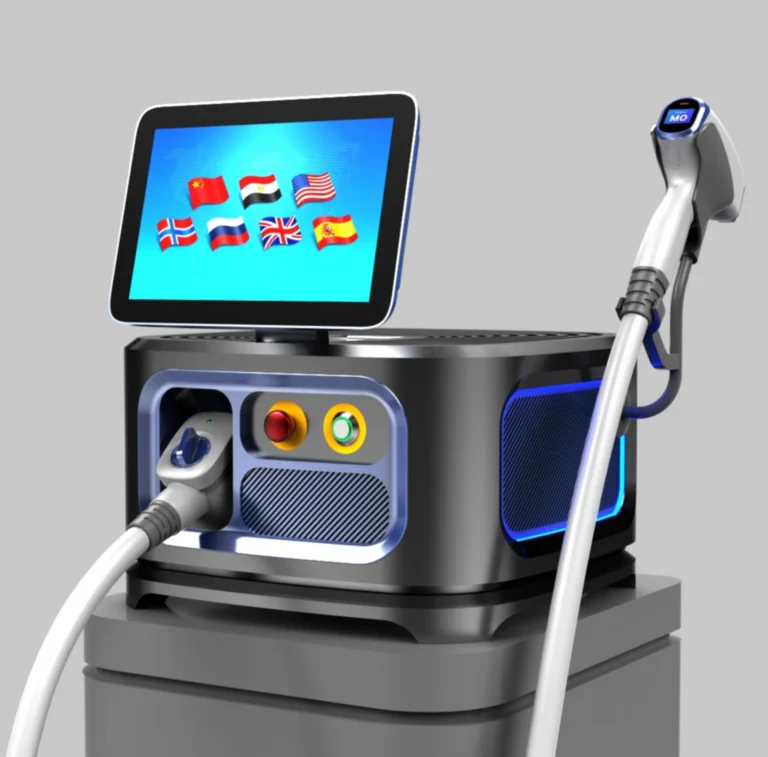
Search for a laser hair removal machine for dark skin and you will get two kinds of answers, neither of them useful to a buyer. One kind is clinical advice written for patients — a laser dermatologist telling you what your own appointment should look like. The other kind is a vendor brochure promising the device works on everyone, forever, no caveats. This article is written for the third reader: the clinic owner, spa investor, or distributor who has to decide what equipment to buy for a clientele that includes Fitzpatrick IV through VI skin, and who cannot afford either a burn incident or a machine that only performs on fair skin. The decision is made on documentation, not promises. By the end you will know which published fields to demand, which supplier answers to refuse, and how to tell a machine that was actually built for diverse skin from one whose marketing was.
If you are an individual shopping for a home device, this is not your page — the honest aisle for that purchase is the consumer category, capped energy and all. What follows assumes you are buying capital equipment for a treatment room where the next client may be deeper-skinned than the last.
Melanin Turns a Spec Sheet Into a Safety Document
Every hair-removal laser works on a target: the melanin pigment inside the hair follicle absorbs the light, converts it to heat, and disables the follicle. That mechanism is the entire reason darker skin complicates the purchase. The melanin in the follicle and the melanin spread through the surface epidermis are the same chromophore, and the machine above the skin cannot tell them apart. Shorter wavelengths are grabbed eagerly by epidermal melanin, which means energy that was aimed at a follicle can be deposited in the skin surface instead — and on Fitzpatrick IV–VI skin, with more epidermal melanin competing for the same beam, that competition is sharper.
Nobody needs to promise you clinical outcomes for this to be a procurement problem. If the physics makes certain field values safer and others riskier on deeper skin, then the machine's published numbers are already safety-relevant documents: the wavelength it actually emits, the pulse duration it can hold, the spot size its handpieces supply, and what the cooling system does between flashes. A supplier who cannot discuss those four fields in relation to darker skin has not built their machine with your clientele in mind, whatever the brochure's before-and-after wall says.
Wavelength Is the First Decision, Not the Last
Within a diode laser product family, wavelength is where the dark-skin conversation starts. Longer wavelengths travel through the epidermis with less melanin competition and reach deeper toward the follicle — which is why a 1064 nm option is the frequency of answer you will hear repeated in professional conversations. The buying-relevant detail is that manufacturers treat wavelength very differently in their documents, and you have to read that treatment carefully.
On MQLASER's published diode pages, the portable SUPLASER platform lists 755 / 808 / 940 / 1064 nm as published wavelengths for the family, while the stationary SPLASER page states 800 ± 15 nm in its specification table and describes 755, 940 and 1064 nm as customization options. Those two phrasings are not the same promise. A wavelength printed in a machine's signed specification table is in the box. A wavelength "described as a customization option" is a manufacturing conversation you still need to have, priced and written down for the exact configuration you are quoting. When a shortlisted vendor answers "we have 1064," the follow-up question is always: in the spec table of the machine I am buying, or in the options brochure? That single question has saved more procurement mistakes than any brand name. Dual-wavelength platforms such as the MQLASER Alexandrite & Nd:YAG line publish both beams in one system for full-range client bases; the same rule applies there - a wavelength in a signed specification is a different promise from a wavelength in customization language.
Pulse Duration, Spot Size, and Cooling Buy the Margin
Wavelength opens the door; three other fields decide whether the machine is actually workable on darker skin. They buy the operator margin — the space between an effective session and an adverse event.
Pulse duration comes first. The published SUPLASER and SPLASER pages both state a 5–170 ms pulse-duration range. The upper end of a range like that matters on darker skin, because a longer pulse lets heat leak out of the follicle at a rate closer to how fast the epidermis heats and cools — a thermal-relaxation idea you can find explained in any reputable laser-physics primer. A machine whose longest setting is short removes options from the operator before the first appointment. Ask for the full stated range, in writing, for the configuration being quoted.
Spot size is second, and less glamorous: smaller tips concentrate scatter and raise epidermal risk, which is why the tiny aesthetic tips are fair-skin tools in practice. The published spot sets differ between the two diode platforms — the portable lists 12 × 12 through 12 × 34 mm plus 4 × 4, Ø8 and Ø10 mm, while the stationary lists the rectangles and the 4 × 4. If your clientele skews deeper, a supplier that can only offer a 4 × 4 tip for facial work is showing you its design bias.
Cooling is third, and it is not comfort marketing. Contact cooling at the handpiece interface is how professional systems keep the epidermis below its damage threshold while energy does its deeper work. Ask what the cooling system is, what its maintenance routine costs, and what happens to the treatment settings if the cooling component is out for repair — because a machine that cannot cool cannot safely run the parameters its spec sheet advertises.
For what each of these fields means on any platform, the diode laser specification reading guide walks the fields line by line; the difference here is which values you insist on for IV–VI skin.
The Supplier's Documents Decide the Purchase
Here is the part most buying conversations skip. A machine that publishes the right numbers still needs a supplier who documents how those numbers get used safely on diverse skin. Four asks separate the serious vendors from the catalog shippers. First, the signed specification sheet for the exact quoted configuration — wavelength table values, pulse range, spot set, cooling type, all of it confirmed for the unit being sold, not the family it belongs to. Second, documented operator training that covers darker-skin parameters and test-spot procedure, because the boundary between equipment and practice sits with the operator and their settings, and no machine should be sold as if it treated patients by itself. Third, written guidance on test spots — how the supplier expects them to be run and documented before fuller-area work begins on deeper skin types. Fourth, the support route: a named contact, parts sourcing, and the escalation path if cooling or a handpiece fails mid-week.
This is also where an honest platform philosophy shows. The SUPLASER four-wavelength page is useful as a published example precisely because it states the wavelength family, spot sizes, pulse range, and fluence window as explicit values — 1–200 J/cm² fluence, up to 10 Hz repetition, 5–170 ms duration — and directs buyers to confirm which values apply to their configuration. A vendor whose documents behave the same way, whoever they are, can survive your due diligence.
A Pre-Purchase Fit Check for IV–VI Clientele
Before shortlisting, put every candidate through the same five rows. The machine that survives them is your dark-skin platform; the ones that leave blanks are answering the question you did not ask.
| Check | What you demand in writing | Red flag |
|---|---|---|
| Wavelength basis | 1064 nm (or your chosen wavelength) printed in the quoted configuration's spec table | "Available as customization" with no priced, dated quote |
| Pulse range | Full stated duration range reaching the longer settings | Max pulse duration too short for conservative protocols |
| Spot set | Larger rectangular tips supplied; small tips present but not required | Only tiny tips offered for facial and neck areas |
| Cooling system | Named cooling method, its service plan, settings fallback during repair | Cooling described as a comfort feature or omitted |
| Training and test spots | Documented operator training for darker skin; test-spot guidance | Training "on the day of delivery," no documents |
Fill the sheet only with what each supplier has actually stated; a blank is an answer. If the machine you are evaluating is a diode platform and workload across skin types is the plan, pair this sheet with the best-machine selection framework so throughput gets scored alongside safety fit — the two sheets measure different failures. MQLASER's diode laser product line publishes the current configuration values for both platforms discussed above, and sending this completed fit check with your questions is the fastest way to find out whether a supplier reads the same way you do.
FAQ
Q: Can one laser hair removal machine treat every skin type safely? One platform can be configured and operated across many skin types; one fixed setting cannot. The machines that cover the Fitzpatrick range do it through selectable wavelength configurations, long pulse-duration settings, appropriate spot sizes, and competent operator adjustment — not through a single automatic mode. Any claim that a device is uniformly safe on all skin with no parameter thinking is a marketing sentence, not an engineering one.
Q: Is 1064 nm always the right answer for dark skin? It is the most commonly recommended wavelength for deeper Fitzpatrick types because longer light faces less melanin competition in the epidermis. But "1064 available" is not the same as "1064 in my machine's spec table," and wavelength alone does not clear the other fields — pulse duration, spot size, and cooling still decide whether the parameters an operator chooses stay inside a safe working envelope. Verify the configuration, then verify the range.
Q: Are at-home devices riskier on dark skin than clinic machines? The product classes carry different safety architecture. Professional systems pair monitored energy delivery with interface cooling and operator training; capped consumer gadgets trade capability for a lower energy ceiling, and their guidance tells users to check skin-type eligibility before use. A clinic should not treat the consumer class as a fallback for darker clients, and consumers should not treat a capped gadget as a cheaper route past the eligibility tables.
Q: What should happen before the first full-area appointment on a Fitzpatrick V or VI client? By documented supplier and clinic practice: a test spot on the actual area, at the planned parameters, with the response observed and recorded over the interval your protocol and training specify. The equipment side of that answer is narrow but firm — the machine must actually be able to deliver the conservative test settings, which means its published pulse range, spot options, and cooling must support them on paper before anyone claims they can in the room.