Read the Performance Percentages as Workflow Claims
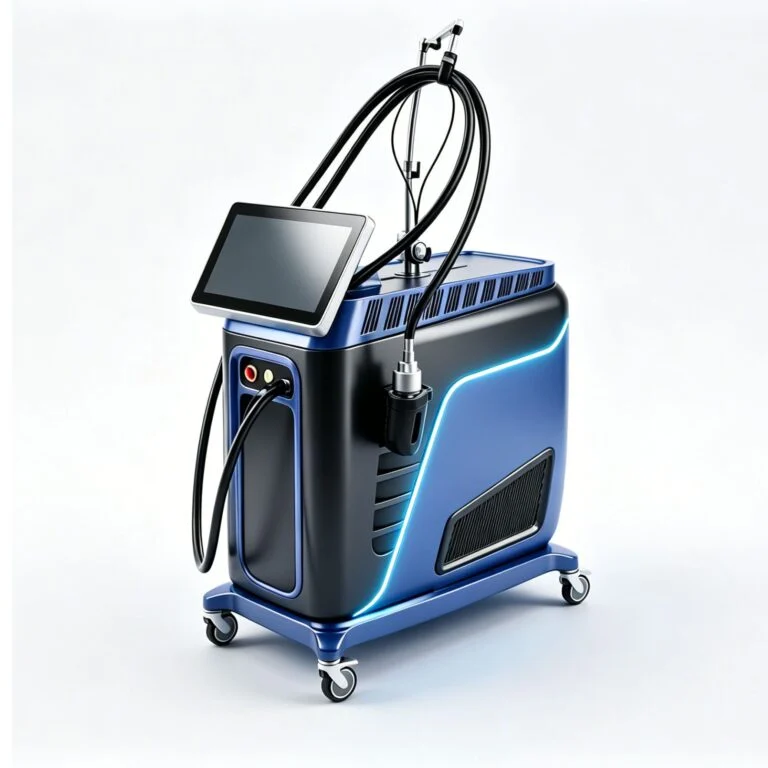
The legacy page attributes time savings to two design points: a larger maximum spot and a design that removes handpiece changes between body areas. The percentages attached to those claims - including the 30-40% treatment-time figure and the 81% patient-interval figure - are vendor descriptions. A buyer can verify the mechanism: ask which spot sizes the quoted system delivers through one handpiece, and how a spot-size change is performed between treatment areas.
Then test the mechanism against your own schedule. A clinic whose bookings are dominated by small areas values the handpiece claim differently from one whose backlog is full-leg series. Neither case needs the percentage to be true for the purchase to be correct; both need the delivered spot-size range in writing.
What Two Wavelengths in One System Actually Decides
The legacy page describes 755 nm as strongly absorbed by melanin and links it to lighter skin tones and finer hair, and describes 1064 nm as deeper-penetrating with less epidermal melanin competition, linked to darker skin tones and coarser hair. The purchasing consequence is that one system is designed to cover cases two single-wavelength machines would split. The evidence boundary is the same page: these are manufacturer descriptions, and the wavelengths that matter are the ones printed in the signed specification of the unit being quoted.
Clinics that also buy for pigmentation or vascular indications should keep those conversations separate. A hair-removal configuration that carries 755 and 1064 nm is not automatically the right platform for other indications, and indications described on a legacy page are not promises for the delivered configuration.
Prepare the Commercial and Support Questions
Because the legacy page publishes no hard numbers, the inquiry does double duty: it requests the missing technical record and the commercial record at the same time. State the destination market, buyer type, expected order quantity, intended professional setting, and customization questions. Ask for the signed specification, packing list basis, delivery terms, training arrangements, warranty coverage, and the cooling-consumable supply route.
Keep the signed specification, quotation, accessory list, and support contacts together as one set. If a supplier document restates a value that differs from the legacy page - a spot size, a pulse duration, a cooling description - the signed document controls, and internal comparisons should be updated to match it before any approval or local marketing use.