Diode Laser Hair Removal Machine: Reading the Specification
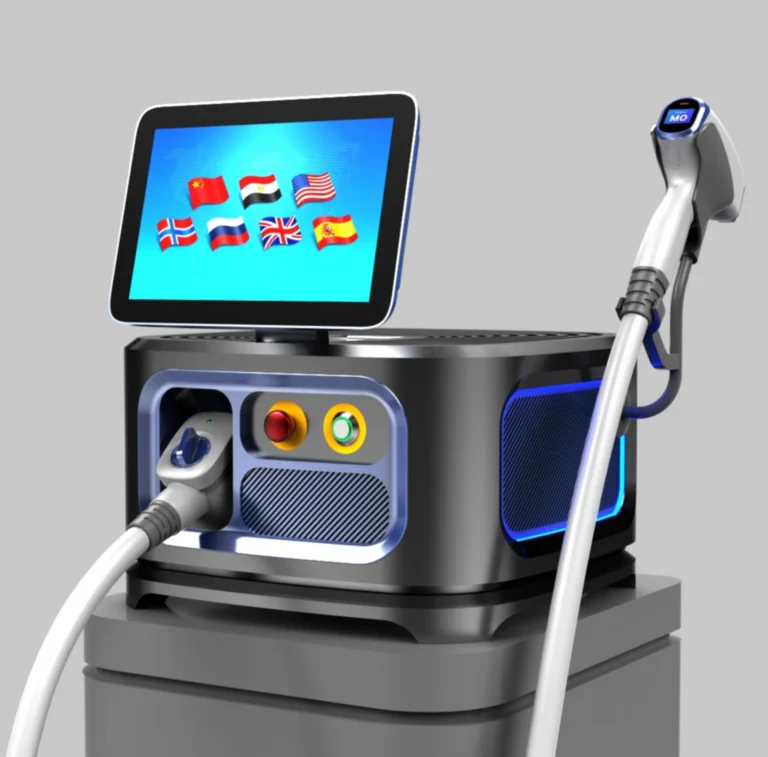
A diode laser hair removal machine specification sheet is the machine's capability contract. Most comparison errors do not start at the price; they start earlier, with fields that were skimmed rather than read. Two machines can look close on a title and a headline power figure and still differ in the wavelength wording, the supplied spot sizes, the fluence window, and the cooling and electrical design. This guide reads a diode specification field by field, in the order a procurement team should work through it, so that the claimed capability of a machine is something you can check rather than something you assume.
The Power Figure Is the First Number to Check
The power value is the number most listings lead with, and it is the number most likely to be quoted without context. On a diode laser hair removal machine, the stated figure is usually a maximum peak power for the exact model, not a continuously guaranteed output across a category.
Two published platforms illustrate why the model matters. A portable diode platform publishes a 1,200 W maximum peak power, and a stationary diode platform publishes a 2,400 W maximum peak power. Both are real, model-specific published values, but neither is a category standard you can carry onto another machine. When you read a power figure on a listing, the questions to put back to the supplier are which exact model it belongs to, whether it is peak or continuous, and which configuration (wavelength, spot size) the figure applies to. A power number that is not tied to a model and a configuration is a headline, not a specification.
Wavelength Wording That Must Match the Signed Specification
Wavelength is where a diode specification most often hides a gap between a marketing page and a signed order. A product page can state the wavelength package in two places, and the two statements are not always the same scope.
On the MQLASER platforms this shows up concretely. The SUPLASER platform publishes a four-wavelength set of 755 / 808 / 940 / 1064 nm. The SPLASER platform lists 800 ± 15 nm in its specification table, while other page language describes 755, 940, and 1064 nm as customization options. Read those side by side and they are not one merged package. The rule for a buyer is to treat a wavelength as included only when the offered configuration states it is included, and to treat any "customizable" or "optional" wording as an option to confirm, not as part of the standard machine.
The 808 nm center is the value most diode hair removal references point to, so a buyer should expect it in a diode platform and ask how it is delivered: as a published wavelength, as the center of a stated range, or as a customization. Whichever it is, the answer belongs on one signed specification, and that document is what you hold the supplier to. For clinics whose clientele skews toward Fitzpatrick IV-VI skin, the laser hair removal machine guide for dark skin shows how these wavelength fields turn into a safety-fit checklist.
Spot Size, Fluence, and Pulse Controls
These fields describe what the machine can actually do in a treatment room, and they are the fields a buyer most often fails to compare because they are buried below the power and wavelength lines.
Spot size. The supplied spot sizes determine which handpieces are in the box and which are add-ons. The SPLASER platform publishes spot sizes of 12 × 12, 12 × 20, 12 × 28, and 12 × 34 mm plus 4 × 4 mm. The SUPLASER platform lists the same rectangular set and adds round spots of Ø8 and Ø10 mm. A comparison must record which sizes ship with the unit, because a listed range is only as useful as the tips that actually come with it.
Fluence range. The adjustable energy-density window is a control, not a claim. Both MQLASER platforms publish a 1–200 J/cm² fluence range. What matters in a comparison is that the range is stated for the exact model, and that the buyer knows the fluence is a working window the operator selects, not a fixed output.
Pulse duration and repetition rate. Both platforms publish a 5–170 ms pulse duration range and a repetition rate up to 10 Hz. These drive handpiece and control design, and they should be read as model-specific values. A specification that gives a power figure but no pulse or fluence control range is telling you less than it looks.
The common thread is that these are control ranges on a specific machine. They are comparable to another machine's ranges only once both are tied to exact models and confirmed on a signed specification.
Cooling, Electrical, and Room Requirements That Change the Plan
The fields below the treatment parameters are the ones that move the room, not the treatment. They are also the fields that a listing is least likely to lead with, which is exactly why they belong in the read.
Electrical supply. Both MQLASER diode platforms publish a 100–230 VAC, less than 12 A, 50–60 Hz, single-phase supply. A buyer should confirm the stated supply for the exact model and hand it to the electrical review, because the unit's supply drives the installation, not the other way around.
Cooling. The cooling method is a specification line and a routine-maintenance input at the same time. Confirm the cooling method, and confirm which parts under it are routine-care items rather than one-time install parts.
Footprint and format. Format is a planning decision, not an afterthought. The SUPLASER platform publishes a portable format at 55 × 65 × 55 cm and 25 kg; the SPLASER platform publishes a stationary format at 55 × 65 × 110 cm and 55 kg. A portable unit is built to move between rooms or locations, while a stationary unit is built to sit in one treatment room and carry a higher daily workload. The footprint, weight, and the number of treatment rooms in the plan are what decide the format, and the format decides several of the specification lines above it.
A machine that is compared on power and wavelength but not on cooling, electrical, and footprint is compared on the parts that are easiest to state, and skipped on the parts that change the room.
Verifying the Claimed Specification Before You Order
When the fields are read, the last step is to make the verification a document rather than a conversation. Keep one record per machine and fill in only what is confirmed for that exact model and configuration; leave a blank where the supplier has not stated it, instead of assuming.
| Verification field | Confirmed on the signed specification |
|---|---|
| Exact model and format | Portable or stationary, published dimensions and weight |
| Maximum peak power | The stated figure, tied to the model and configuration |
| Wavelength set | Which are included, which are customization options |
| Spot sizes and handpieces | The exact sizes and tips supplied in the box |
| Fluence range | The published J/cm² window, model-specific |
| Pulse duration and repetition | The stated duration range and maximum repetition rate |
| Cooling method | The method and the routine-care parts under it |
| Electrical supply | Voltage, current, phase, and frequency |
| Support route | Named contact, maintenance, spare parts, market documents |
The verification route matters as much as the fields. A buyer should be able to ask for one current signed specification, confirm the values against it, and name who answers a technical question after delivery. Where a product page lists a value in more than one place, the signed specification is the single document the comparison stands on, not the product page.
MQLASER publishes both a portable and a stationary diode platform, with each model page stating its own reference values for a buyer to confirm against a quotation. The diode laser hair removal product line is the starting point for that confirmation, with the SUPLASER and SPLASER model pages publishing their respective values. If you are still deciding between the laser route and the IPL route, the laser vs IPL guide covers that earlier decision on the same basis. Then you can request product information with the verification record in hand, so the supplier responds to a specific, written configuration rather than a general one.
FAQ
Q: How do I know the peak power a diode laser hair removal machine is quoting is real? Ask for one current signed specification for the exact model and confirm the stated maximum peak power against that document, along with which configuration the figure applies to. A power number that is not tied to a specific model and configuration is a headline, and it is not comparable to a model-specific value on another machine.
Q: A product page lists several wavelengths. Are they all included in the machine? Not necessarily. A platform can publish some wavelengths as part of the listed configuration and describe others as customization options. Record which wavelengths are in the offered configuration, which are options, and which handpiece or accessory goes with each confirmed choice, then ask the supplier to confirm that record in writing against the signed specification.
Q: What should I confirm about spot sizes before I compare two diode machines? Confirm the exact spot sizes and handpieces supplied in the box, not just the listed range. A range is only comparable when you know which tips ship with the unit and which are add-ons, so fill in the supplied sizes on each machine's verification record before comparing.
Q: How does the cooling and electrical specification affect my decision? Those fields change the room and the operating cost, not the treatment. Confirm the cooling method and its routine-care parts, and the stated electrical supply for the exact model, and carry them into the facility and maintenance plan. A machine compared on power and wavelength but not on cooling and electrical is compared only on its easiest-to-state fields.