Laser vs IPL for Professional Hair Removal: What a Buying Team Should Compare
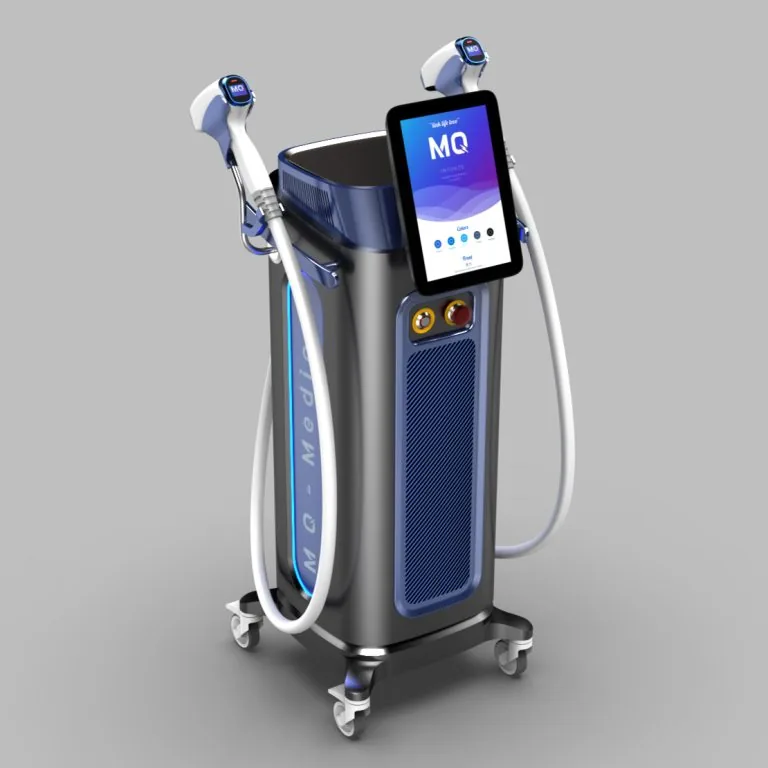
"laser hair removal" and "IPL" get used interchangeably in product listings, supplier catalogs, and search results. They are not the same technology. A laser and an intense pulsed light (IPL) unit are built around different light sources, which leads to different equipment requirements, different facility planning, and different service menus. For a buying team, choosing between an IPL vs laser hair removal route is the decision that comes before shortlisting any machine, because it determines the class of equipment, the power and cooling the room must support, and the way specifications should be read. This guide walks through that comparison the way a procurement team should make it, and ends with a decision rule.
Laser and IPL Are Different Light Sources, Not Two Brands
The difference starts at the light source, and it is a device-level difference, not a marketing one.
Laser: one wavelength, one purpose. A laser hair removal machine generates light at a single, narrow wavelength. The beam is coherent and directional, so the device is built to deliver one defined band of light through a handpiece with precise control over energy, pulse timing, and spot size. Every specification field on a laser machine (wavelength, fluence, pulse duration, repetition rate) describes that one light source.
IPL: a filtered band of light. An IPL unit uses a xenon-type flash lamp to produce a broad band of light, then filters it down to a working range. The device is built around a flashlamp, a filter set, and a larger light-coupling design, and its maintenance pattern (lamp life, filter changes) follows from that design.
The practical consequence for a buyer: when a listing says "professional hair removal system" without naming the light technology, you do not yet know which class of machine you are being shown. Power figures, cooling needs, handpiece design, and consumable patterns all differ between the two classes, so a specification comparison only makes sense once the route is fixed.
How Wavelength and Selectivity Shape the Service Menu
Both technologies work by delivering light energy that melanin absorbs, so the buyer should not expect one to be "for everyone" and the other "for nobody." What differs is how the selectable wavelength range maps to a service plan.
Laser: a defined wavelength set. A diode laser machine publishes a specific set of wavelengths (for example, a four-wavelength platform publishing 755 / 808 / 940 / 1064 nm). Each wavelength is a defined, checkable value on the signed specification, and the planning question is which of the published wavelengths are included in the offered configuration and which are customization options.
IPL: a filter-defined band. An IPL unit's working range comes from the filter set it ships with. The planning question is which filters are supplied, whether filters are replaceable, and what the stated band covers for the service menu being planned.
Wavelength choice interacts with the client profile a practice serves. The parameters a buying team should confirm with the supplier, and review with local professionals, are the published wavelengths or filter bands, the fluence range, and which values are model-specific. No supplier page should be asked to do the clinical work for you, and no article can substitute for that local review. The equipment decision is about matching the published, verifiable capability of the machine to the service scope the practice intends to run.
What Changes in the Facility: Power, Cooling, and Workflow
The light-source difference shows up in the room before it shows up in a treatment plan.
- Electrical supply. A diode laser platform in this class publishes a 100–230 VAC, less than 12 A, 50–60 Hz, single-phase supply. An IPL unit of similar scale is usually on a comparable supply, but the exact figures must be read from each unit's specification, not assumed from the category.
- Cooling architecture. Both classes manage heat, but the cooling method and its service parts differ between a solid-state laser platform and a flashlamp-based IPL unit. The cooling line on the specification is a facility-planning input, not a footnote.
- Consumables and maintenance pattern. IPL units carry flashlamp and filter life as routine items. Diode laser platforms carry their own set of routine-care parts. A 12-month ownership budget should be built from the machine's actual maintenance items, and the laser hair removal machine cost guide shows how to lay those items out as a worksheet.
- Footprint and workflow. Portable and stationary formats exist in both classes, and the format decision (one movable unit versus a fixed treatment room) drives room planning the same way in either route.
The point is that "laser" and "IPL" are not interchangeable adjectives on the same room plan. Each route has its own power, cooling, footprint, and maintenance inputs, and those inputs belong in the facility decision before a quote is compared.
Reading a Diode Laser Specification for the Claimed Role
If the route decision points to a laser, the next step is reading the diode specification correctly. The fields below are the ones that separate a checkable machine from a category claim, and the MQLASER published values are used here as concrete, model-specific examples rather than category standards.
| Spec field | What it tells you | MQLASER published examples |
|---|---|---|
| Maximum peak power | The output ceiling for the exact model | SUPLASER 1,200 W; SPLASER 2,400 W |
| Wavelength set | The defined wavelengths, and which are options | SUPLASER 755 / 808 / 940 / 1064 nm; SPLASER 800 ± 15 nm in the spec table with 755 / 940 / 1064 nm described as customization |
| Spot sizes | The handpieces and areas available | SPLASER 12 × 12 to 12 × 34 mm plus 4 × 4 mm; SUPLASER adds Ø8 and Ø10 mm |
| Fluence range | The adjustable energy density window | 1–200 J/cm² on both platforms |
| Pulse controls | Duration and repetition the unit supports | 5–170 ms, up to 10 Hz on both platforms |
Two cautions carry over from the price side of this purchase. First, wavelength wording that appears in two places on the same product page must be confirmed against one signed specification, never merged by the buyer. Second, a "professional diode" headline with no model-specific values is a category claim, not a specification. If you want to go deeper on each field (what the power number actually covers, how to verify it, how to build a per-model verification record), the diode laser hair removal machine specification guide covers that field by field. And when the configuration is fixed and the money question opens, the laser hair removal machine price guide is the follow-on.
When IPL Equipment Fits the Plan, and When It Does Not
The honest answer is that IPL has a real place in professional hair removal, and a serious buying team should say so. An IPL vs laser hair removal decision is not "laser always, IPL never."
Where IPL commonly fits. Salon-scale plans, tighter first-year budgets, and service menus that lean on the IPL filter bands it ships with are the patterns where IPL is a common, defensible choice. Its consumables (flashlamps, filters) are understood, and the equipment class is widely available, which helps a buyer find local service in many markets.
Where a diode laser route is the stronger fit. When the plan is a professional practice or a distributor range with a multi-wavelength diode platform, the case is different: the machine is defined by a set of published, model-specific wavelengths and controls; the power, cooling, and electrical figures are stated on a signed specification; and the verification path (one document, checked field by field) is the same for every model in the range. A buying team that needs comparable, verifiable configurations across a product line is usually better served by the diode route than by mixing IPL and laser listings.
The decision rule. Fix the service scope first. If the scope is a salon-scale, single-room plan with a budget-first posture, an IPL unit on its own published filter set is a legitimate route. If the scope is a professional practice or distribution range that needs a coherent, specification-verified platform with a named support route, take the diode laser route and compare diode platforms on the same fields. Once the route is fixed, do not let a listing that mixes the two technologies back into the shortlist.
MQLASER publishes both a portable and a stationary diode platform, with each model page stating its own reference values. The diode laser hair removal product line is where that route starts, and you can request product information with the chosen route and the fields you need confirmed.
FAQ
Q: What is the actual difference between a laser and an IPL hair removal machine? The light source. A laser produces light at one narrow, defined wavelength with precise control over energy and pulse timing. An IPL unit produces a broad band of light from a flash lamp and filters it to a working range. The two device classes differ in power design, cooling, consumables, and how their specifications should be read, so they should not be compared as if they were the same category.
Q: Which is better for a professional clinic, laser or IPL? It depends on the service scope and operating model, not on the label. Salon-scale, budget-first plans are a common fit for IPL on its own published filter set. A professional practice or distribution range that needs a coherent, specification-verified platform with a named support route is usually better served by a diode laser route. Fix the scope first, then compare within the route you chose.
Q: Can I compare the price of a laser machine and an IPL machine directly? Not fairly. The two classes have different power, cooling, consumable, and specification structures, so two numbers from different classes describe different purchases. Normalize within a class first: compare laser quotes against laser quotes and IPL quotes against IPL quotes on the same configuration fields, and treat a cross-class price gap as a signal about the route, not about value.
Q: How do I confirm the wavelengths a supplier lists for a diode laser machine? Ask for one current signed specification for the exact model, and confirm the wavelength set, peak power, fluence range, and pulse controls against that same document. Where a product page lists values in more than one place (for example, a spec table range and separately described customization options), do not merge them; confirm the offered configuration in writing before comparing machines.