How to Choose a Fractional CO2 Laser Machine for a Clinic
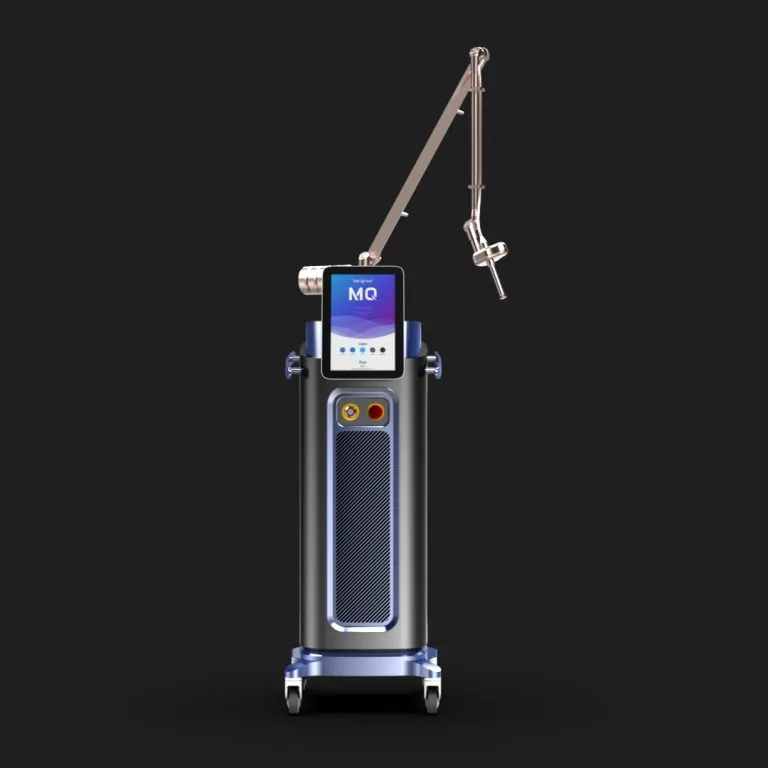
Procuring a CO2 fractional laser machine is a capital decision that touches facility planning, staff training, regulatory compliance, and long-term service costs. For clinic owners, medical directors, and distributors evaluating options, the challenge is not simply comparing output power or spot size on a specification sheet. It is matching the quoted machine and support package to the clinic's operating conditions and destination-market requirements. This guide provides a same-basis method for recording confirmed facts, identifying evidence gaps, and comparing shortlisted suppliers.
Clinic Workflow and Buyer Fit
Before evaluating any CO2 fractional laser machine, map your current and projected workflow. Ask the following questions:
- How many treatment sessions per day does the clinic realistically schedule for this modality?
- Is the machine intended for a single operator or a rotating team?
- Will the device sit in a dedicated treatment room or share space with other equipment?
- Does your patient base require quick turnover between sessions, or is a longer session acceptable?
- Are you a single-site clinic or a multi-location distributor managing a fleet?
The answers shape which form factor and configuration makes sense. A clinic that plans to keep the equipment in one defined room may begin with a stationary format, while a buyer comparing movement between locations may begin with a portable format. The quotation still needs to confirm the actual footprint, handling instructions, cooling arrangement, scan controls, and supplied components. Neither form factor is universally superior; the fit depends on the buyer's operating model and the exact quoted configuration.
Distributors should also consider whether they need a single SKU or a product line that covers both stationary and portable fractional CO2 platforms. A line that offers both allows you to match the device to each client's facility rather than forcing one configuration on every site.
Configuration Fields That Matter in Procurement
When a supplier presents a co2 fractional laser machine, the spec sheet is only the starting point. The fields below determine whether the machine will perform as expected in your environment:
- Wavelength: CO2 fractional systems commonly operate at 10,600 nm. Confirm that the supplier states this explicitly and that it aligns with the intended tissue interaction for your market's regulatory classification. A useful reference is the CO2 laser wavelength guide, which explains how wavelength relates to absorption and fractional pattern design.
- Output power range: Record the stated minimum and maximum power for the exact model. MQLASER's public references list 15–70 W for DEPPLUS and DIATERMOLOGIE, but the quotation must confirm the supplied configuration, selectable modes, display units, and verification method.
- Scan scope: MQLASER's public references list a maximum 20 × 20 mm scan scope for those two models. Confirm whether the quoted unit uses that maximum, which smaller fields are selectable, and how the supplier documents them.
- Fractional pattern and density: Do not assume two machines with the same scan scope produce identical patterns. Request model-specific pattern documentation or a documented demonstration.
- Cooling method: Record the quoted model's cooling arrangement, environmental limits, and routine-care instructions. Do not infer them from the product category or form factor.
- Software and interface: Request the current software version, language options, saved-setting behavior, user-access controls, update route, and support scope instead of assuming these functions are included.
- Accessories and handpieces: Separate standard components from options and request a complete itemized quotation and packing list.
A critical caveat: shared reference values across models (such as the same wavelength, power range, and scan scope) do not prove identical internal components, cooling architecture, software, transport design, or service requirements. Always qualify specifications at the model level, not the product-line level.
Room, Electrical, Cooling, and Staff Workflow Requirements
A co2 fractional laser machine does not operate in a vacuum. The physical and logistical environment determines whether the device will be installed smoothly or become a source of recurring friction.
Room requirements. Record the complete working footprint, access route, service clearances, storage needs, environmental limits, and any ventilation instructions supplied for the quoted model. Do not infer room requirements from a product photograph or from the words stationary and portable.
Electrical supply. Record the voltage, phase, amperage, plug, protective-device, and circuit requirements stated for the exact model. Give those written requirements to a qualified electrician for site review. For multi-site deployments, compare the requirement at every intended location before installation.
Cooling and routine care. Ask the supplier to identify the cooling arrangement, environmental conditions, routine checks, required fluids or filters if any, and the parts involved in normal maintenance. Put every supplied item and buyer responsibility in the configuration sheet so the site team can plan installation and ownership costs from written information.
Staff workflow. Map the sequence from intake through documentation and convert unknowns into written questions: Is a warm-up step required? Which supplied components require cleaning, replacement, or preparation? What does the applicable manual require between sessions? Compare the supplier's documented workflow with the clinic's staffing and room plan rather than assuming a step from another model.
Training, Documentation, and Regulatory Readiness
The gap between a machine that works in the manufacturer's lab and a machine that works reliably in your clinic is training and documentation.
Operator training. Ask the supplier what training, if any, is included in the quotation. Record the format, duration, language, roles covered, assessment method, trainer, delivery location, and retraining route. For distributors, confirm in writing whether training materials can be delivered to end-clinics or whether operators must use a manufacturer-led route.
Documentation. Request the following before purchase:
- Operator manual in the language your staff reads
- Service and maintenance manual
- Calibration certificates or a calibration protocol
- Regulatory documentation relevant to your market (see below)
- Software user guide with session logging instructions
Regulatory and authorization requirements. Local authorization, facility, operator, and intended-use requirements vary by market. In some jurisdictions, a co2 fractional laser machine is classified as a medical device requiring registration or approval before clinical use. In others, it may fall under a different regulatory category. The FDA medical laser overview provides a reference for how the U.S. classifies medical lasers, but your market's rules may differ substantially. Before finalizing a purchase, confirm with your local regulatory authority or a qualified regulatory consultant that the specific model you are buying is authorized for your intended use in your jurisdiction. Do not rely on a supplier's general statement that the product is "CE-marked" or "FDA-cleared" without verifying the exact model and intended-use classification.
Operator qualifications. Some markets require that only licensed medical professionals operate fractional CO2 systems. Others permit trained technicians under medical supervision. Confirm the operator qualification requirements in your market and ensure your staffing plan meets them.
Maintenance, Parts, Warranty, and Downtime Planning
The quoted purchase price is only one field in the ownership calculation. Installation, routine care, parts, shipping, labor, training, and downtime allowances should be recorded separately from confirmed supplier charges and the buyer's own assumptions.
Warranty terms. Request the current written warranty for the exact model. Record the term, covered components, exclusions, required maintenance, labor, shipping, diagnosis route, repair location, and actions that can affect coverage. Leave any field marked pending until the supplier provides it in writing.
Parts availability and lead times. Ask the supplier to identify model-specific routine-replacement and service parts, current ordering routes, stock locations, estimated lead-time method, and any stocking restrictions. For distributors, confirm in writing which parts they may stock and which require manufacturer service.
Escalation path. Define what happens when the machine fails. Ask for support hours, response targets, remote and on-site routes, return instructions, estimated-turnaround method, and escalation contacts. If the supplier publishes service data, request the scope and measurement period before using it in the comparison.
Downtime cost. Model one-day, three-day, and one-week scenarios using the clinic's own schedule, contribution assumptions, and any confirmed supplier response targets. Keep the supplier's written obligations separate from the buyer's scenario assumptions when comparing total ownership exposure.
Calibration and power verification. Ask how output is checked, which instrument and procedure are used, what record is supplied, and whether periodic verification is part of the support package. The NIST laser power and energy calibrations page provides metrology context, but it does not verify any supplier or model claim.
Same-Basis Supplier Comparison and Next Steps
When you have narrowed your shortlist, compare suppliers on the same basis. Do not let two vendors present different spec formats and call it a comparison. Build a table that forces equivalence:
| Decision field | What the buyer must record | Evidence to request |
|---|---|---|
| Laser source | Stated wavelength and source type for the quoted model | Current model specification |
| Output | Published range, selectable modes, display units, and measurement point | Specification and supplier explanation of the verification method |
| Scanner | Maximum scan scope and adjustable pattern fields | Scanner specification and model-specific demonstration |
| Delivery and accessories | Every included handpiece, tip, lens, footswitch, and safety item | Itemized quotation, packing list, and labeled images |
| Cooling and site needs | Cooling arrangement, electrical input, environmental limits, and any room preparation | Installation and operating instructions for the quoted model |
| Software and interface | Version, language, user access, saved-setting behavior, and update route | Current software record and support scope |
| Training and documentation | Training format, language, user roles, manuals, and handover records | Written training plan and document list |
| Warranty, parts, and service | Covered components, exclusions, diagnosis route, parts ordering, labor, shipping, and escalation | Written warranty and support terms attached to the quotation |
| Market requirements | Exact model identity and destination-specific documents available for review | Document index for review by the buyer's local adviser or importer |
| Total ownership planning | Confirmed acquisition costs plus buyer-calculated installation, maintenance, parts, and downtime allowances | Supplier quotation combined with the buyer's own operating assumptions |
Note: The shared reference values (wavelength, power range, scan scope) are publicly stated for both the DEPPLUS stationary fractional CO2 system and the DIATERMOLOGIE portable fractional CO2 system published by MQLASER. These shared figures do not prove identical internal components, accessories, cooling architecture, software, transport design, or service infrastructure. The table above illustrates how to force a model-specific comparison rather than a product-line comparison.
Conditional recommendation. A stationary platform may fit a clinic that plans to keep the system in one defined room, while a portable format may fit buyers who need to evaluate movement or deployment between locations. The decision still depends on the quoted unit's confirmed footprint, cooling arrangement, electrical needs, supplied accessories, handling instructions, software, and support scope. Form factor is therefore a starting condition for the comparison, not proof of any unquoted capability.
Next step. Once you have completed the comparison table and validated regulatory requirements in your market, request a detailed product information package from your shortlisted suppliers. For MQLASER, you can request product information directly, and the fractional CO2 laser product line page lists both the stationary and portable platforms for reference. Use the information package to verify the specific configuration, accessories, and service terms for the exact model you intend to purchase.
FAQ
What is the difference between a stationary and a portable CO2 fractional laser machine?
The public distinction is the stated form factor. Do not infer cooling architecture, handling limits, or transport suitability from the words stationary and portable. Compare the exact dimensions, weight, cooling arrangement, installation instructions, handling guidance, supplied components, and support terms in the current model documents. Neither form factor is inherently superior; fit depends on the verified configuration and operating plan.
Do I need a specific license or certification to operate a fractional CO2 laser?
Requirements vary by market. In some jurisdictions, only licensed medical professionals may operate fractional CO2 systems. In others, trained technicians may operate under medical supervision. Some markets require the facility itself to be registered or the device to be registered before clinical use. Confirm the operator qualification, facility, and device registration requirements with your local regulatory authority before purchase. Do not assume that a CE mark or FDA clearance in one market translates to authorization in another.
How do I verify the laser output power stated by a supplier?
Ask the supplier for the model-specific measurement method and available calibration or verification records. The NIST laser power and energy calibrations page describes reference metrology services, but it does not verify any supplier claim. If supporting records are not provided, label the value as supplier-stated rather than independently verified and keep that distinction in the comparison.
What should I verify about breakdown support and replacement parts?
Before purchase, request written support hours, response targets, diagnosis and repair routes, parts-ordering responsibilities, estimated-turnaround method, and whether any temporary replacement arrangement is offered. Model downtime using the clinic's own assumptions, then compare only commitments that appear in the supplier's written terms.
Can the same CO2 fractional laser machine be used for different protocols?
The machine's hardware (wavelength, power range, scan scope) defines the physical parameters available. Whether you can apply it to different clinical protocols depends on your market's regulatory classification of the device, the intended-use labeling, and your operator's training and qualification. A device cleared for one intended use may not be authorized for another in your jurisdiction. Confirm the intended-use scope with your regulatory authority and ensure your operators are trained for the specific protocols you plan to perform.