Laser Hair Removal Machine Price: What Drives the Range and How to Compare Quotes
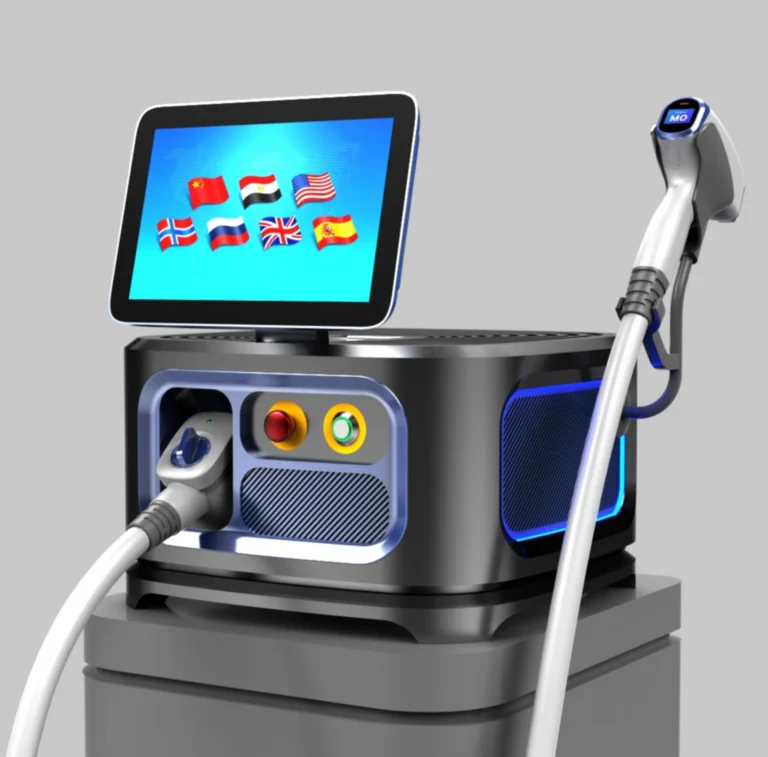
A laser hair removal machine can be quoted at very different prices even when the listing says the same thing: professional, diode, for clinic use. That gap is not noise. It comes from configuration, format, and what is actually included in the number you are being shown. This guide explains which fields move a diode laser price, what sits next to the machine price in a landed cost, and how to read a supplier quotation before you negotiate it.
Why Two Machines With the Same Label Price Differ
Two commercial diode systems can carry the same headline and still be built for different operating models. The difference shows up in a few physical and specification choices that are not obvious from a product title.
Portable versus stationary format. A portable unit and a floor-standing unit are not the same machine at a different price. A compact platform is designed to move between rooms or locations, while a stationary platform is designed to sit in one treatment room and run a higher daily workload. The footprint, weight, and cooling arrangement each format requires are part of the price, not an add-on.
Peak power and wavelength package. The stated peak power and the set of wavelengths included change what the machine can do and what it costs to build. A four-wavelength portable platform is priced against a single-source stationary platform, and neither is simply "better." They answer different workload and room questions.
Cooling and electrical requirements. The cooling method and the electrical supply the unit needs shape both the machine and the installation. A buyer who ignores these fields often discovers them later, at the electrician or the room, not at the invoice.
The practical point is that a bare laser hair removal machine price is a starting point, not a comparison. Two quotes for "the same" machine differ when the configuration behind the label differs.
The Configuration Fields That Move a Diode Laser Price
When you compare professional diode laser machines, the specification fields below are the ones that change the number and that you should be able to read back on every quote. The values shown for the two MQLASER platforms are published reference points for those specific models, not a universal standard for the category.
| Field | What to confirm on the quote | How it affects price |
|---|---|---|
| Format | Portable or stationary, published dimensions and weight | Larger, fixed footprints and higher sustained output cost more |
| Peak power | The stated maximum and the exact model it belongs to | Higher stated output raises build and cooling cost |
| Wavelength package | Which wavelengths are included versus optional | More included wavelengths raise price; treat "customizable" as an option |
| Fluence range | The published J/cm² range and whether it is model-specific | Wider ranges and verified fluence control add value and cost |
| Pulse and repetition | Pulse duration range and maximum repetition rate | These drive handpiece and control design |
| Spot sizes | The exact spot sizes and handpieces supplied | More supplied tips and sizes increase what is in the box |
| Cooling | The cooling method and any routine-care parts | Cooling architecture and its service parts are priced in |
| Electrical | Voltage, current, phase, and frequency | The supply the unit needs can drive installation cost |
For reference, the MQLASER SUPLASER platform publishes a portable format at 55 × 65 × 55 cm and 25 kg, four wavelengths (755 / 808 / 940 / 1064 nm), 1,200 W maximum peak power, a 1–200 J/cm² fluence range, up to 10 Hz, and 5–170 ms pulse duration. The SPLASER platform publishes a stationary format at 55 × 65 × 110 cm and 55 kg, a 2,400 W maximum peak power, and a 1–200 J/cm² fluence range with up to 10 Hz. Both list a 100–230 VAC, less than 12 A, 50–60 Hz, single-phase supply.
Read those as the difference between a movable, four-wavelength unit and a heavier, higher-output stationary unit. The price gap between the two follows from that difference, not from a supplier's list price.
The Landed Cost Items That Sit Next to the Machine Price
The laser hair removal machine price on the page is usually only the first line of what you pay. A few items sit right next to it and move the real number for your location.
- Freight and logistics. Diode platforms are heavy. A 25 kg portable and a 55 kg stationary unit ship differently, and the packing and freight are separate from the machine line.
- Customs and import handling. Depending on your market, duties and clearance add a line that the quoted price does not include.
- Training and operator materials. Confirm what training, in what language, for which roles, is included in the quote.
- Documentation and market documents. The manuals, calibration, and the documents that apply to your destination market are separate confirmations, not assumptions.
- Wear items and routine parts. Some consumables and routine-care parts are priced into ownership, not into the first invoice.
If you want to turn these into a working budget rather than a list, the laser hair removal machine cost guide builds a 12-month worksheet that carries acquisition, operating, and downtime items together. The price you are reading here is the first input into that worksheet, not the whole worksheet.
How to Read a Supplier Quotation Before Negotiating
A clear quotation is one you can compare against another line by line. Before you negotiate, make sure the quote you are reading answers each of these.
Itemized, not bundled. A useful quotation lists the machine, the supplied handpieces and tips, the cooling arrangement, the electrical requirements, and any optional items separately. When everything is folded into one number, you cannot tell what is standard and what was added.
Standard versus optional, in writing. Wavelength and accessory options are where quotes diverge. On the MQLASER SPLASER platform, for example, the published specification table lists 800 ± 15 nm while other page language describes 755, 940, and 1064 nm as customization options. A buyer should not merge those into one assumed package. Ask for a single current signed specification that states the exact wavelength configuration offered, and confirm the stated peak power, spot sizes, and fluence range against that same document.
Model-specific, not category-specific. A shared value across models does not prove the same internal components, cooling, software, or service requirements. Attach every figure to the exact model on the quote.
A verification route. The quote should name who answers technical questions, how maintenance and spare-parts requests are handled, and which documents apply to the model and your market. If the supplier cannot state the route in writing, treat the price with the caution it deserves.
Red Flags in Suspiciously Low Laser Hair Removal Machine Prices
A low laser hair removal machine price is worth investigating, not rejecting, but a few patterns mean the number is not comparable to a serious quote.
- A single number with no configuration. When the price is not tied to a stated format, power, wavelength package, and supplied parts, you are comparing a label, not a machine.
- Missing consumables and service parts. The box contents are thin, the routine-care parts are absent, and the first operating cost lands on you.
- No service or support route. There is no named contact for technical questions, maintenance, or spare parts after delivery.
- No documentation or language commitment. The manuals, calibration, and market documents are not confirmed for the destination market or the language your team reads.
- Category-level claims presented as a specification. A general "professional diode" statement is used in place of a model-specific, verifiable set of values.
None of these means the seller is acting in bad faith. It means the price you are looking at is not built on the same basis as a quote you can verify, so it is not a fair comparison.
Comparing Diode Laser Machine Quotes on the Same Basis
Once you have itemized quotes, compare them on the same set of fields instead of on the headline number. Keep one record per quotation and fill in only what is confirmed for that exact model.
| Record field | Fill in only what is confirmed |
|---|---|
| Exact model and format | Portable or stationary, published weight and dimensions |
| Wavelength package | Included wavelengths and which are optional |
| Peak power and fluence | Stated maximum and the fluence range, model-specific |
| Pulse and repetition | Pulse duration range and maximum repetition rate |
| Supplied tips and spot sizes | The exact handpieces and sizes in the box |
| Cooling and electrical | The cooling method and the stated supply |
| Landed items | Freight, customs, training, documents, wear parts |
| Support route | Named contact, maintenance, spare parts, market documents |
When two quotes line up on these rows, the lower price is a real signal. When they do not line up, the lower price is usually missing something you will pay for later.
MQLASER publishes both a portable and a stationary diode platform, so a buyer can match the format to the room and the workload before discussing configuration. The diode laser hair removal product line is the starting point for that conversation, with the SUPLASER portable and SPLASER stationary pages publishing their respective reference values. Use the checklist above to request the exact configuration, supplied documents, training, and support terms for your market, then request product information with the shortlist in hand.
FAQ
Q: Why do two professional laser hair removal machines with similar specs have very different prices? Usually because the configuration behind the label differs: portable versus stationary format, stated peak power, the wavelength package included, cooling arrangement, and what is actually supplied in the box. A price that is not tied to those fields is not comparable to one that is.
Q: Does a lower laser hair removal machine price mean a better deal for my clinic? Not on its own. A low price can mean the quote omits consumables, training, documents, or a support route that a higher, itemized quote includes. Compare itemized quotes on the same fields before treating a lower number as a better deal.
Q: How should I confirm the wavelength and power a supplier is quoting? Ask for one current signed specification for the exact model, and confirm the stated peak power, fluence range, pulse duration, and repetition rate against that same document. Treat "customizable" or "optional" wavelengths as options to confirm, not as part of the standard package.
Q: What should I do before I negotiate a diode laser machine price? Turn the quote into an itemized record: model and format, included wavelengths, peak power and fluence, supplied tips, cooling and electrical, and the landed items like freight, customs, training, and documents. Negotiate from a quote you can verify rather than from a headline number.