Laser Tattoo Removal Machine Buying Guide: Pico vs Q-Switch
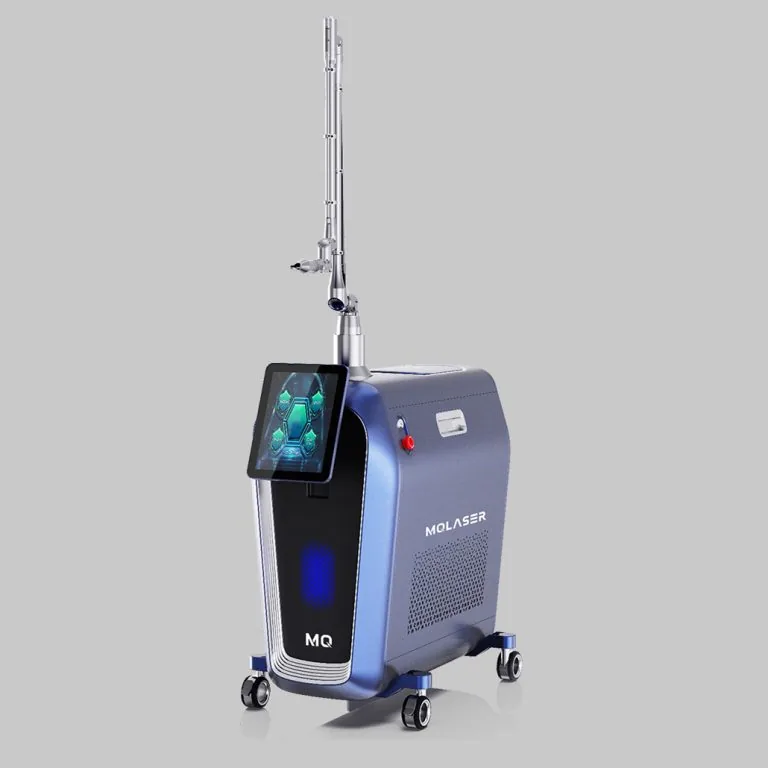
A laser tattoo removal machine should be selected from the exact quoted configuration, the clinic's intended professional workflow, and the support available in its market. The words picosecond and Q-switched identify pulse-duration categories, but neither label tells a buyer which wavelengths, optics, accessories, documents, training, or service terms are included. A useful comparison therefore keeps the technology category in one field and verifies the rest separately.
Understanding the Core Technology Difference
The distinction between picosecond and Q-switched laser systems begins with pulse duration. Picosecond systems state pulse width in picoseconds, while Q-switched platforms are commonly described in the nanosecond category. The purchasing task is to record the measured or published pulse-duration value for each quoted mode and wavelength rather than treating either category name as a complete performance specification.
MQLASER publishes DEPELITE as a real picosecond system. Its model-scoped public reference values include 350 ps, 1064 nm and 532 nm, 1-10 Hz, and a 2-10 mm spot-size range. These figures describe the published DEPELITE reference; they do not define every picosecond system or establish that every quoted configuration includes the same optics, accessories, energy range, or documents. A Q-switched candidate needs the same model-specific record. For the platform question underneath both categories - what Nd:YAG commits a buyer to across beams, modes, and pulse width - see the Nd:YAG laser machine buying guide.
Pulse duration alone does not establish suitability, outcome, or a universal technology ranking. A systematic review indexed by PubMed reported limited and heterogeneous evidence for picosecond tattoo-removal studies available at the time of review. For procurement, that is a reason to compare the exact device, intended use, training, configuration, and support rather than assuming that every picosecond machine will outperform every Q-switched system.
What the Pulse Duration Actually Means for Your Practice
When evaluating a machine for a professional practice, pulse duration is one line in a larger configuration. The buyer should record the laser source, stated pulse width, included wavelengths, spot-size options, repetition-rate range, delivery components, handpieces, software version, electrical requirements, cooling arrangement, and supplied safety information for the exact model.
For DEPELITE, 350 ps, 1-10 Hz, and 2-10 mm are published reference values. A buyer can use those fields to structure questions, but treatment settings and clinical protocols must come from the device's applicable labeling, professional training, and local requirements. The comparison should not convert a published range into a recommendation for any person or procedure.
Optional wavelengths, accessories, energy ranges, and market documents remain unconfirmed until the current quotation identifies them. Request a dated specification, itemized included-component list, and document index before treating any photograph or product-family description as the supplied package.
Wavelengths and Coverage: What to Verify Before You Buy
Wavelength coverage is a core purchasing field because different tattoo colors may respond differently to different wavelengths. The FDA tattoo-removal overview explains that laser selection depends in part on tattoo color and also cautions that complete removal may not be possible. That guidance supports a careful evidence review; it does not turn a wavelength list into a result guarantee.
When comparing systems, verify the following:
- Which wavelengths are included in the base configuration versus optional add-ons
- Which handpiece or optical component applies to each wavelength
- The spot size range available at each wavelength
- Whether the repetition rate is adjustable across the full range or limited at certain wavelengths
The MQLASER DEPELITE references 1064 nm and 532 nm as its public specifications. If a buyer requires another wavelength, the quotation must confirm whether it is available, whether it is standard or optional, which delivery component is used, and how it changes training, maintenance, and parts needs. The picosecond and Q-switch product line provides a starting point for requesting the current model configuration.
Procurement Comparison Table
The following table summarizes the key procurement variables to compare when evaluating picosecond and Q-switched systems. This is not a ranking of one technology over the other. It is a framework for documenting what each candidate system offers so you can make an informed decision.
| Procurement Variable | Picosecond System (e.g., MQLASER DEPELITE) | Q-Switched System |
|---|---|---|
| Pulse Duration | 350 ps (publicly referenced for DEPELITE) | Record the quoted model value |
| Wavelengths (confirmed) | 1064 nm, 532 nm (publicly referenced for DEPELITE) | Record included and optional wavelengths separately |
| Additional Wavelengths | Unconfirmed until quoted | Unconfirmed until quoted |
| Spot Size Range | 2-10 mm (publicly referenced for DEPELITE) | Record the quoted range for each wavelength |
| Repetition Rate | 1-10 Hz (publicly referenced) | Record the quoted model value |
| Energy Range | Unconfirmed until quoted | Unconfirmed until quoted |
| Accessories | Unconfirmed until quoted | Unconfirmed until quoted |
| Market Documentation | Request formal specification sheet | Request formal specification sheet |
Use this table as a checklist. Fill in confirmed values from manufacturer quotations and leave unconfirmed items blank until you receive documented specifications.
A Conditional Decision Rule for Your Purchase
Rather than asking which technology is universally better, apply the same evidence rule to both categories.
Choose a picosecond candidate when the quoted pulse-duration category is important to the clinic's planned, locally authorized workflow and the supplier can document the exact wavelength package, delivery components, training, maintenance, and service scope. Choose a Q-switched candidate when its verified configuration, intended-use documentation, operating workflow, and ownership plan fit the buyer better. When neither quotation closes the evidence gaps, keep both options pending instead of deciding from the technology label.
For every shortlisted machine:
- record the exact model and standard configuration;
- separate included components from options;
- compare pulse duration, wavelengths, spot-size range, repetition rate, and delivery components on the same basis;
- confirm electrical, cooling, installation, training, documentation, routine care, parts, warranty, and escalation responsibilities;
- ask the buyer's local regulatory adviser or importer to review the exact model and destination-market documents; and
- calculate landed and first-year ownership costs from confirmed amounts, using the tattoo removal machine cost guide as a worksheet structure.
The next step is to request a dated, model-specific information package. Buyers reviewing the MQLASER product line can start with the picosecond and Q-switch systems and then request product information for their country, buyer type, planned professional workflow, and required documents. The final decision should follow the confirmed configuration and support route, not a generic Pico-versus-Q-switch ranking.
FAQ
What is the practical purchasing difference between a picosecond and a Q-switched laser?
The categories use different pulse-duration scales: picosecond systems state pulse width in picoseconds, while Q-switched platforms are commonly described in the nanosecond category. For purchasing, that distinction should lead to a model-level comparison of the stated pulse width, wavelengths, optics, controls, documents, training, and support rather than a conclusion based on the category name alone.
Do 1064 nm and 532 nm prove that a machine covers every planned tattoo-removal case?
No. They identify wavelengths in the published or quoted package, but they do not establish suitability for every tattoo, person, indication, or market. Qualified clinical and regulatory review must consider the exact device labeling, operator context, and local requirements. Additional wavelengths or delivery components should remain unconfirmed until they appear in the current quotation.
How should a buyer verify laser tattoo removal machine specifications?
Request a dated specification and itemized quotation for the exact model. Match the pulse-duration value, included wavelengths, spot-size range, repetition rate, delivery components, accessories, electrical and cooling needs, manuals, training, warranty, parts route, and market documents across the specification, packing list, and written support terms. Mark missing fields as pending rather than entering assumptions.
Should a clinic choose a machine from the lowest quoted price?
Price should be compared only after configuration and responsibility are normalized. A lower base price may exclude wavelengths, accessories, training, freight, documents, parts, or service that another quotation includes. Compare the landed and ownership scope on the same basis before judging the commercial offer.