Best Laser Hair Removal Machine: What "Best" Means in a Clinic Schedule
Ask around for the best laser hair removal machine and watch the results page split in two. Half of it is at-home devices — review sites putting handheld gadgets through tests on individual skin. The other half is the commercial conversation: a clinic, a spa, or a distributor deciding which machine should carry a treatment schedule for the next several years. This article is about that second conversation, and it takes the word "best" at its word. Nobody has ever built a machine that is best in the abstract. What exists is a machine that is best against a plan — a room count, a daily client load, a staff roster, a service menu. Write the plan down and "best" stops being a marketing adjective. It becomes a scoring problem: throughput, comfort continuity, service backing, cost per available hour, each measured against your schedule rather than somebody else's leaderboard.
Two Audiences Share One Phrase
Before the scoring begins, name the routing move this article is making — the results page never makes it explicit. Half the competing pages are consumer reviews; the other half are supplier quotes. Same words, two completely different intents, and any page that tries to serve both ends up as a leaderboard nobody can buy from.
So, to the individual buyer who wandered in: the honest category for a home purchase is the consumer device aisle, shopped on its own terms, capped energy and everything. Nothing below applies to that purchase; a clinic spec sheet is not a shopping guide for a bathroom shelf. To the commercial buyer — clinic, spa, distributor — the machine below is capital equipment. It has to drain a daily queue, hold an appointment template, and stay serviceable for years. That plan is what "best" gets measured against from here.
Throughput Math Starts With the Fields You Can Verify
A treatment schedule is a queue, and three published fields decide how fast that queue drains: the spot sizes the handpieces supply, the repetition rate the platform sustains, and the fluence window the operator works inside.
The arithmetic is simple, and nobody has to treat a single patient to see it. Say a platform publishes a 12 × 34 mm rectangular tip. A lower-leg pass then takes a fraction of the flashes a 12 × 12 mm tip needs. Or take a repetition rate stated up to 10 Hz — that machine can fire on a shorter cadence than one capped lower, and the gap compounds across every flash of every session. Multiply the shorter pass by the daily client count, and the difference between two machines stops being a spec-sheet nuance. It becomes rooms-hours per week, which is the number that decides whether one machine carries your schedule or you start quoting a second one.
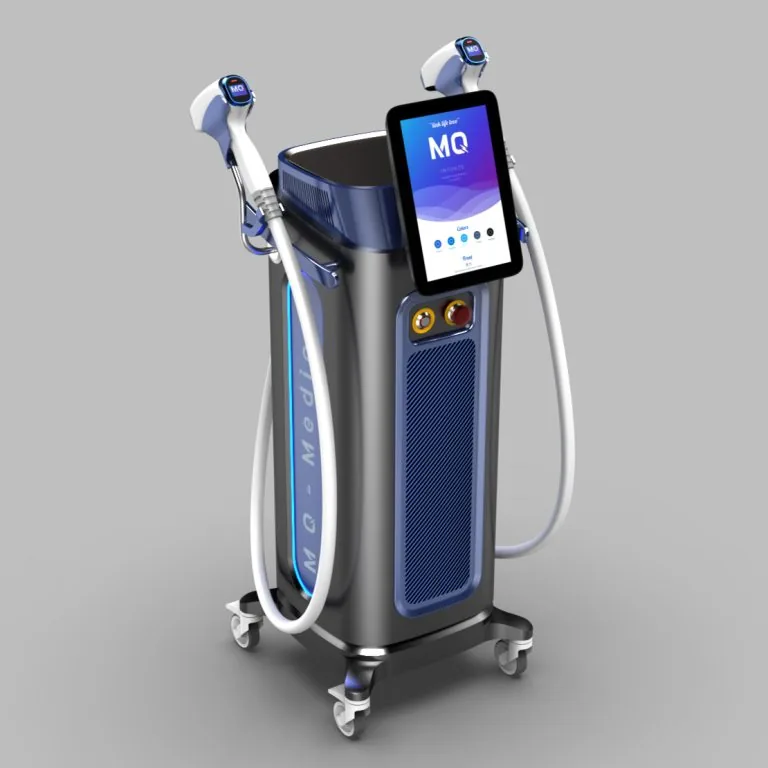
Two published platforms make the fields concrete. A stationary diode platform lists spot sizes from 12 × 12 through 12 × 34 mm plus a 4 × 4 mm tip, a repetition rate up to 10 Hz, a 1–200 J/cm² fluence window, and 5–170 ms pulse duration. A portable platform in the same family publishes the same working ranges and adds round spots of Ø8 and Ø10 mm. The comparison logic matters here, not the brand. Take each shortlisted machine's stated sizes and rates — from its signed specification, never its headline — and run them against your busiest treatment areas at your real daily volume. Whichever machine's verified fields drain your specific queue faster wins your plan's throughput round, whatever any generic ranking says.
Comfort and Cooling Are Schedule Factors, Not Luxuries
The second ranking factor gets dismissed as a comfort feature. It is actually an operating variable, because session pacing decides your appointment template. If machine A's protocol needs long inter-flash pauses for client tolerance while machine B's contact cooling lets the operator hold a steadier cadence, then machine A does not merely feel warmer. It stretches every appointment by a margin, and that margin accumulates across the week.
This is exactly why the cooling line on a specification belongs in a throughput review. Ask what the cooling system is. Ask what routine care it needs and what happens to the cadence if a cooling component goes out for service. The machine that runs its planned repetition rate comfortably, all day, in your room temperature, is the one that actually holds your appointment template. A machine that holds it only during a demo session does not. Any serious evaluation should include this test: ask the supplier what continuous-duty behavior the platform publishes for your busiest service, then put the answer in writing next to the fluence and rate figures it depends on.
Comfort continuity also protects the schedule from the opposite failure. Watch what happens when an operator starts dialing energy or rate down to keep sessions tolerable — quietly, a machine with strong published fields has become a slow one. The diode laser specification reading guide walks through the field-level meaning of every number referenced here, and the same reading applies to every other platform on your shortlist.
The Service Network Decides What "Best" Survives
A clinic schedule is a promise to future clients. Which brings us to the ranking factor with the largest hidden weight — the one no spec sheet advertises: what happens the week the machine is not available? Two machines can publish identical fields and diverge completely here.
Score it as a buyer, before purchase, on the same written basis as everything else. Is there a named technical contact, or only a shared inbox? How are spare handpieces, tips, and cooling parts sourced, and how fast? Which documents exist for the exact model in your market, and who confirms them? Which training backs your staff when a new operator joins mid-year? A machine that tops the throughput table and then sits unrepaired for three weeks because its support route is a contact form has not won anything. Its schedule cost gets counted in cancelled appointments. The 12-month cost guide worksheet already prices downtime as a line item; apply the same discipline to ranking and you expose what a leaderboard cannot — service backing is a performance field of the whole purchase, not a courtesy attached to it.
A Weighted Scoring Sheet Built From Your Own Plan
Name the factors and the ranking becomes a sheet you fill in. The honest part: the weights come from your plan, not from this article. A single-room spa with a packed evening calendar will weight throughput and comfort continuity highest. A distributor buying for several clinic customers will weight service route and document readiness above raw speed. A practice expanding from one handpiece to a full menu will weight spot-size coverage and configuration flexibility.
| Ranking factor | What to record, from written sources | Why it earns weight |
|---|---|---|
| Verified throughput fields | Spot sizes supplied, stated repetition rate, fluence window — per signed specification | Drains your actual queue; the schedule math |
| Comfort and cooling continuity | Cooling method, routine-care parts, stated continuous-duty behavior | Holds the appointment template all day |
| Service and parts route | Named contact, parts sourcing, escalation path, market documents | Bounds the cost and length of any outage |
| Configuration headroom | Which wavelengths, tips, and modes the offered configuration includes | Determines what the machine still covers in year two |
| Twelve-month landed cost | Machine plus freight, documents, training, spares, downtime allowance from the worksheet | The number that survives the purchase order |
Fill the sheet only with values a supplier has confirmed in writing. Leave blanks where nothing was stated. Then weight each row against your plan and watch the "best" answer change by buyer type — that shifting answer is the whole point. On the diode side of this class, MQLASER publishes both a portable and a stationary platform with the spot-size, fluence, and rate ranges quoted above on their model pages, which makes them usable as concrete rows in the sheet rather than promises; the diode product line carries the current configuration values. Whatever list the arithmetic produces, send the completed sheet along with your questions. A supplier that answers a scoring sheet line by line is demonstrating, in writing, the exact support behavior the sheet's third row was trying to predict.
FAQ
Q: Is the best laser hair removal machine the one with the highest power figure? A power number without a queue is meaningless. Higher stated output earns ranking position only if your treatment mix, room count, and schedule actually convert that capability into completed sessions. For plenty of plans, a verified repetition rate and larger supplied spot sizes move more clients per week than a bigger headline wattage.
Q: Can an at-home device compete with a clinic machine on results or speed? They are different product classes, not competitors. At-home devices are capped personal gadgets. Clinic platforms are engineered around professional energy delivery, interchangeable handpieces, and continuous daily duty. Home purchase? Shop the consumer category honestly. Service menu? The machine must carry a schedule — which is the one thing the consumer class was never built to do.
Q: How many treatment rooms can one machine cover? The honest answer is arithmetic, not a promised number. Published spot sizes and repetition rates give you a per-session time. Your appointment template gives you sessions per day. The comparison tells you the point where the queue exceeds one machine's capacity. Larger supplied tips and higher sustained rates raise the ceiling; the schedule math computes it for your plan specifically.
Q: What matters most when two machines score almost the same? Whatever happens after delivery. Compare the written support routes — named contact, parts sourcing, document package for your market, retraining terms. Two machines with near-identical published fields diverge most in how fast each one returns to service, and that divergence is measured in appointments.