Tattoo Removal Machine: The Three Things This Search Term Actually Covers
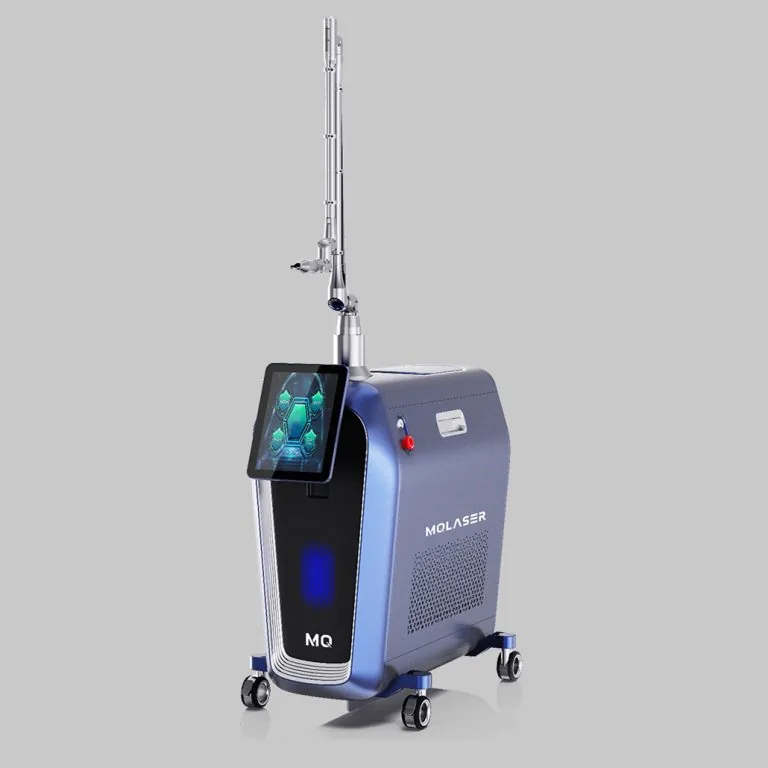
Search the phrase "tattoo removal machine" and the results page answers with three different products wearing the same name. Consumer gadgets sit next to used professional units on marketplace listings, which sit next to picosecond and Q-switched systems on supplier sites. That mix is not a ranking accident; it is the state of the market, and it is the reason the buying conversation has to start somewhere other than a price list. Before you compare configurations or negotiate a quote, you need to decide which of the three classes your plan actually belongs in, because each class carries a different capability ceiling, a different ownership burden, and a completely different definition of what "buying a machine" even means.
One Phrase, Three Very Different Products
The classes are easy to state once you have seen them side by side, and the search results page is the fastest demonstration.
Class one is the consumer device. A small handheld unit sold online for personal use, usually described with words borrowed from professional equipment. Class two is the marketplace and used unit — a professional-grade machine resold secondhand or listed by a general marketplace seller, often at a price that looks like a shortcut. Class three is the professional system bought from a manufacturer or specialist supplier, delivered with a stated specification, a named support route, and the documentation a commercial installation needs.
These are not three price points on one spectrum. They are three different purchases. The rest of this guide takes each class on its own terms, because the questions that matter for a $100 gadget, a $5,000 used unit, and a configured professional platform barely overlap.
Class One: Consumer Gadgets Sold as Tattoo Removers
The recurring question in the search results for this phrase tells you what buyers want to know first: do home tattoo removal machines work? A structural answer is possible without any clinical claims, because the difference is visible in how the device is built.
A consumer device is engineered to be safe in untrained hands at low energy. That constraint shapes everything: the light source is small, the wavelength options are fixed or absent, the pulse controls are minimal or hidden behind presets, and the spot size is small. A professional tattoo laser removes ink by delivering controlled, high-peak-power pulses at specific wavelengths through interchangeable handpieces — a delivery the consumer form factor cannot reproduce, which is why a home unit is a different product category rather than a smaller version of the same one.
There is also a safety boundary that a listing rarely states. Tattoo ink sits in the dermis, under the surface of the skin, and any device that reaches it at professional energy is a device for trained operators in a professional setting. A buying team evaluating a consumer gadget for a commercial use case — a studio, a booth, a trial offer — is asking a class-one product to do a class-three job, and no listing language fixes that mismatch.
Class Two: Marketplace and Used Professional Units
The second class looks like the smart-money option: a machine that matches professional descriptions, at a fraction of the cost, shipped by a marketplace seller. Some used equipment is genuinely serviceable. The buying question, though, is not the sticker price; it is what transfers with the unit and what does not.
- The service route rarely transfers. A professional machine's support relationship — who answers a technical question, how a repair is handled, where a spare handpiece comes from — belongs to the original buyer relationship, not to the serial number. A marketplace listing usually cannot name a support contact, and an unnamed route is a cost you pay later, in downtime.
- Documentation and history are thin. For a used unit you want the maintenance history, calibration record, original specification, and any incident the unit has had. Marketplace listings rarely carry any of the four, and their absence is the default, not an oversight.
- Wear items are consumed silently. Laser sources, lamps, crystals, and handpieces have finite working lives that are not visible from a photograph. Two identical-looking used units can be at opposite ends of that life, and the listing price reflects neither position.
- Market compliance is unverified. The documents that apply to your jurisdiction accompany a machine through the supplier relationship. A cross-border marketplace shipment usually carries none of them.
A used professional unit can be a legitimate purchase when the history, support, and parts questions have written answers. The check is simple: if the seller cannot answer them, you are not buying a discounted professional system; you are buying an unbacked box that looks like one.
Class Three: Professional Pico and Q-Switch Systems
The third class is the one a clinic or studio plan actually shops for, and it is defined by verifiable capability rather than price language. A professional tattoo laser publishes a pulse-duration category (nanosecond Q-switched or picosecond), the wavelengths the configuration includes, the energy and spot-size ranges, and the electrical and footprint requirements — all against an exact model.
To see what "published" means in practice, take one real platform: the DEPELITE picosecond system publishes a 350 ps pulse width, 1064 nm and 532 nm wavelengths, 1–10 Hz frequency, a 20–3,000 mJ energy range, and a 2–10 mm adjustable spot size, on a 110 / 220 V, 50 / 60 Hz, 1,800 W supply, in a 60 × 110 × 120 cm / 110 kg chassis, with 755, 1320, 585, and 650 nm described as customized wavelength options. Read that the way any professional specification should be read: every figure belongs to that exact model, the optional wavelengths are options rather than a merged package, and the values are the starting point for a written confirmation against a current signed specification, not a copy-paste into a comparison.
Inside this class, the first decision is still technology-level rather than supplier-level: picosecond and Q-switched platforms deliver light differently and fit different service plans. That decision has its own reasoning, and the pico vs Q-switch comparison works through it on the same evidence basis. The class-three point here is narrower: only this class publishes the numbers you need for that comparison at all, which is exactly the difference from classes one and two.
Routing Your Budget to the Class Your Plan Needs
With the classes separated, the routing question becomes mechanical. Match what the plan requires against what each class structurally has.
| What your plan involves | Class one: consumer gadget | Class two: marketplace / used unit | Class three: professional system |
|---|---|---|---|
| Intended user | An individual, personal use | A buyer accepting history risk | A clinic, studio, or distributor plan |
| Published specification | None or marketing-level | The original spec, not the unit's state | Current, model-specific, confirmable |
| Service and parts route | Consumer returns only | Rarely transfers with the unit | Named contact, maintenance, spare parts |
| Documentation for a commercial site | No | Usually missing | Confirmed with the configuration |
| What the price actually buys | A capped personal device | A machine minus its history and support | A capability plus a support relationship |
Three honest conclusions follow from the table. If the plan is personal use, class one is the honest category and should be shopped as one, with no expectation borrowed from professional listings. If the plan is commercial, class one is disqualified by construction and class two only qualifies once the history and support questions have written answers — at which point it stops being "the cheap option" and becomes a vetted equipment purchase. And if the plan is a service menu you intend to build and market, class three is where the conversation starts: the tattoo removal machine cost guide handles normalizing the quotations once you are there, and the picosecond and Q-switch product line publishes current configuration values you can put straight into that process, or send with a written request for the exact configuration, documents, and support terms for your market.
FAQ
Q: Do home tattoo removal machines actually work? Judge them by what they are built to be: capped-energy personal devices with fixed optics and no professional controls. That construction answers the question at the class level — a home unit is not a smaller professional machine, and using one for commercial ink removal asks a consumer device to do a professional job.
Q: Is a used tattoo removal machine a smart shortcut? It can be a legitimate purchase, but only when four things have written answers: maintenance history, calibration status, whether any support route transfers to you, and how spare parts will be sourced. A marketplace listing that cannot produce those answers is not a discounted professional system; it is a machine without its documentation, history, or backing.
Q: How do I know which class my business plan needs? Match the class to the plan, not the budget to the class. A personal-use purchase is class one. A one-site commercial plan with a vetted history and support route can consider class two. A service menu you intend to build, staff, and market is class three, because only that class publishes model-specific specifications and a support relationship to score against.
Q: Why do tattoo removal machine prices in listings vary so wildly? Because the listings span three product classes, not three price points of one product. Most of the gap between a $100 headline, a $4,000 marketplace unit, and a configured professional quotation is class difference — capability ceiling, documentation, and support relationship — before a single configuration field is compared. Normalize within a class first.